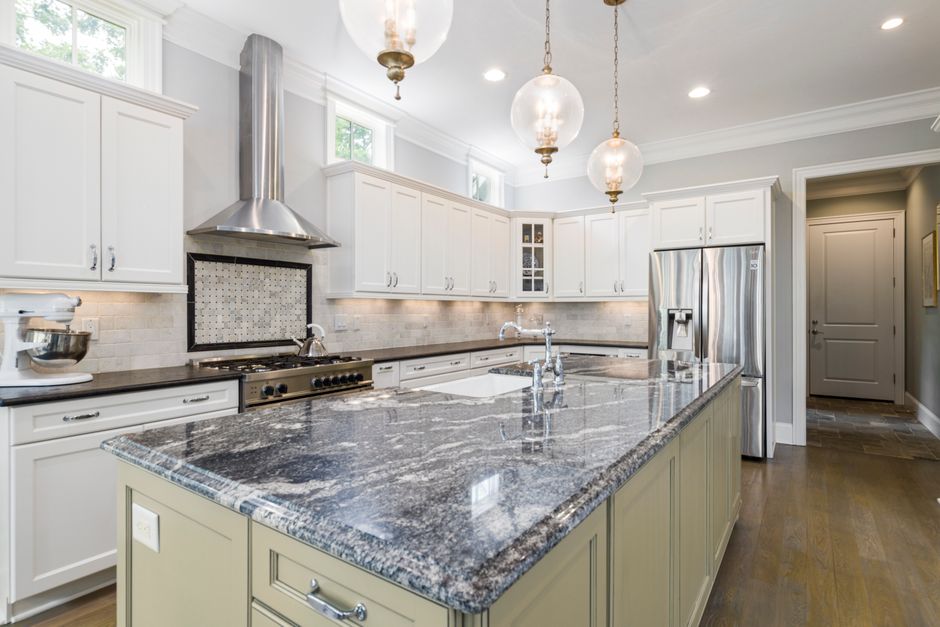
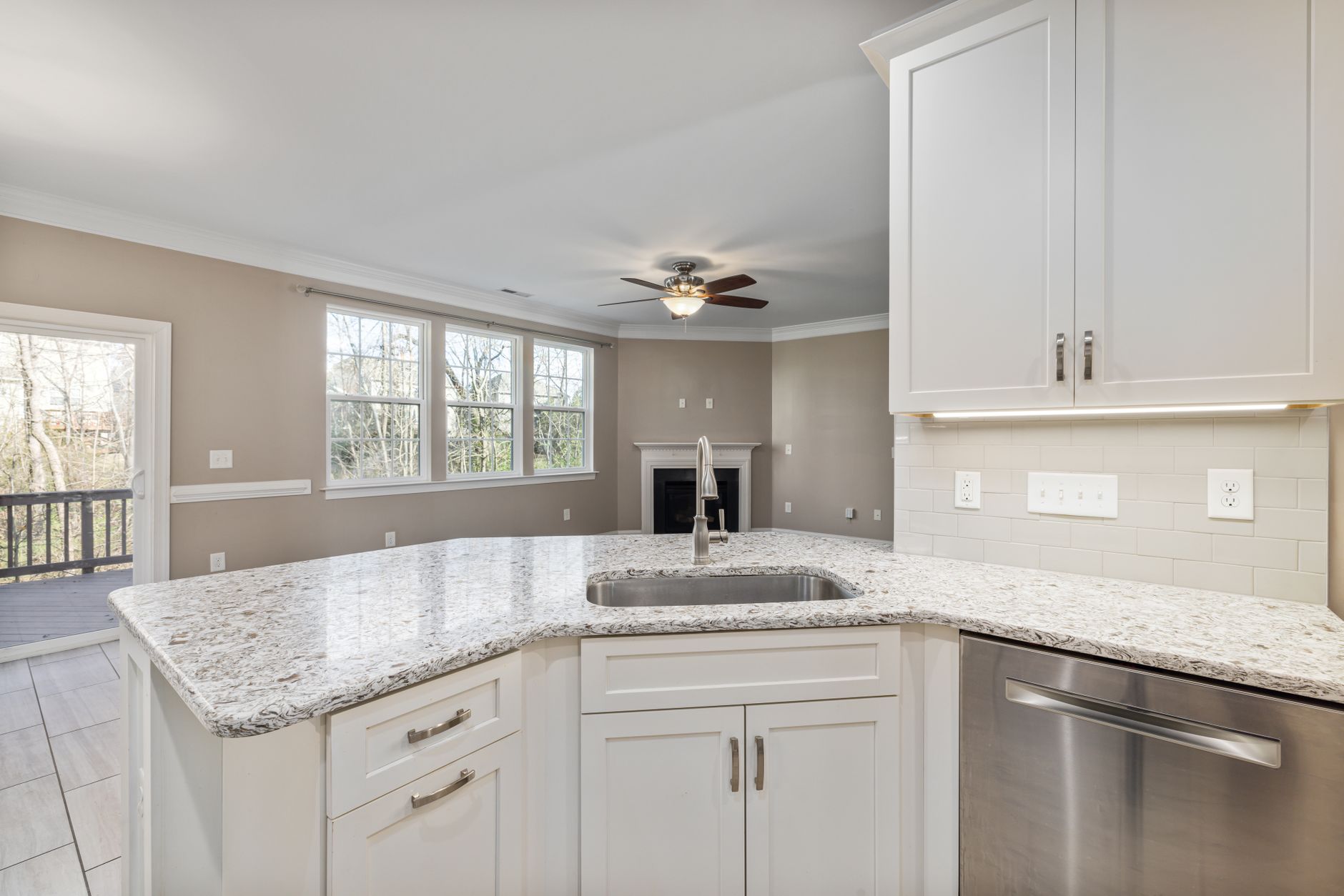
Granite is the material that survives the most daily abuse in an older kitchen, provided the cabinets beneath it are level, dry and strong enough to carry stone. The honest answer to which countertop holds up best in an aging Buncombe County kitchen is that no single material wins every condition. Granite, soapstone and porcelain shrug off heat and sunlight that scorch or discolor quartz, while quartz beats granite on stain resistance for a household that will not maintain a surface. The checks underneath the slab matter as much as the slab itself.
Level the base cabinets before anyone templates
Lay a long level across the base cabinets in both directions. Floors in older neighborhoods such as Montford and West Asheville have settled and sloped over the decades, and the cabinets on top of them follow the tilt. Stone will not flex to correct a crooked base. An unsupported spot under a slab becomes a crack later, often at the worst place, near a cutout. Shimming the cabinet frames until the run is flat is the smallest job on the project and the biggest protection against a cracked slab, and it belongs before the fabricator arrives.
Confirm the boxes can carry stone
Particleboard cabinet boxes that have swollen, sagged or delaminated should be replaced before stone goes on them. Kitchens along the Swannanoa and French Broad rivers that took water during Hurricane Helene need extra scrutiny. Damp particleboard loses strength even after it looks dry, and a box that feels solid today can compress under a heavy slab next winter. Plywood boxes in good condition, screwed and glued into a flat frame, are what granite, quartz or soapstone expect underneath.
Template only after everything is on site
Templating should happen after the cabinets are fixed in place and the sink, faucet and cooktop are physically in the house. Templates taken from drawings, or from cabinets that can still shift, are a common cause of slabs that do not fit on delivery day. A faucet that arrives taller than assumed can force a last-minute recut or a larger hole than the slab can spare.
Walk the delivery route a day early
Many Buncombe County homes sit on steep lots with long or narrow driveways. Before the slab arrives, walk the route it will take from the truck to the kitchen. Measure doorways, gate openings and every turn, and clear the path of furniture, planters and loose steps. Large pieces can crack if they are carried at an awkward angle or twisted on a slope. A route a two-person crew can walk flat, with the slab vertical and unhurried, is the route that prevents a replacement order and a long wait.
Compare the materials by how the household cooks
Granite
Granite earns its reputation in busy kitchens, but it does not all behave the same, so test the actual slab rather than trusting a general rule. Leave a small puddle of water on the surface for several minutes. If the stone darkens, it needs sealing. If it stays the same, sealer may not be needed yet. Retest about once a year instead of resealing on a fixed schedule. Choose an eased or slightly rounded edge, which chips less than a sharp square edge near the dishwasher and sink where heavy pots get banged.
Quartz
Engineered quartz needs no sealer and resists stains better than most natural stone, which suits a family that will not maintain a surface. It has two weaknesses. The resin inside can scorch or discolor under a hot pan, so trivets belong on the counter every time. That matters in mountain homes where cast iron cookware and wood stove cooking are common. Quartz can also yellow or fade in strong, direct sunlight, so keep it out of sunrooms, covered porches and outdoor kitchens and put granite or porcelain slab in those spots.
Marble and limestone
Marble and limestone react with acids such as lemon juice, vinegar, wine and tomato. The result is a dull etch mark, which is a different problem from a stain. Sealer slows stains but does not prevent etching. A honed finish hides etching better than a polished one, which is why kitchens that choose these stones usually pick honed and accept that the surface will change character over the years.
Soapstone
Soapstone resists heat and acids well and needs no sealer at all. It is soft, so it scratches easily. Light scratches can be sanded or oiled out, and the stone darkens with mineral oil as it develops a patina. Some owners want that weathered look and others oil often enough to keep an even color. Decide before the slab is cut, because soapstone either darkens into a patina or gets maintained, and there is no middle setting.
Porcelain
Porcelain slabs handle heat and sunlight better than almost anything else on this list, which makes them a strong pick for a bright kitchen or one near a wood stove. Their thin edges can chip, and porcelain does not machine like granite or quartz. Ask any fabricator about their specific experience cutting porcelain before hiring them for it. A shop that cuts mostly quartz may not have the right blades, table or handling habits.
Butcher block
Butcher block moves with humidity. Damp summers swell it and dry wood stove heat in winter shrinks it. Oil it regularly, seal the underside and all cut edges, especially around the sink, and leave the installer room for seasonal movement. Do not set a wood top directly over a dishwasher without a moisture barrier. Steam escaping from the vent causes warping and dark staining from underneath, which no amount of surface oiling can fix.
Laminate and solid surface
Laminate is a sound choice for rentals and budget remodels. It fails mainly at seams and around sink cutouts, where standing water gets into the core and swells it. Wipe those areas dry and choose an undermount style made for laminate or a well sealed drop in sink. Solid surface is less heat resistant than stone, but scratches and minor burns can usually be sanded out, and its seams can be made almost invisible, which makes it the most repairable option in its class.
Get a seam plan before the cutter runs
Ask for a seam layout drawing before any cutting starts. Seams should not fall at the sink cutout or right next to the cooktop, where water, heat and pots attack them daily. A good seam is tight, flat and color matched, but it will always be visible up close, so placement is the real decision. On an island, confirm how many pieces are planned and where the join sits. A drawing accepted in advance prevents a seam landing in the worst spot and a disagreement afterward about who approved it.
Check the support details during install
Undermount sinks need proper mounting clips or brackets along with adhesive, so look under the sink during the first weeks for drips and for any gap opening between the sink rim and the stone. Long overhangs at islands and bar tops need hidden steel supports or brackets, and thinner slabs need closer support than thicker ones. Ask the fabricator what support your stone and overhang length require before the slab is set, because adding a bracket afterward means cutting into an installed counter or living with a sag.
Plan for well water and cold months
Many rural Buncombe homes run on private wells, and water mineral content varies from one well to the next. Have the water tested. Mineral spots show quickly on dark polished surfaces, and wiping counters dry after use prevents buildup. In seasonal cabins or second homes left cold over winter, let a chilled stone counter warm up before setting very hot cookware on it. Large, sudden temperature differences add stress, especially near existing fissures or cutouts.
Care that keeps the finish
Clean stone and quartz with a pH neutral cleaner. Repeated use of vinegar, harsh degreasers or bleach dulls sealers, etches natural stone and discolors quartz resin over time. Watch the caulk at the joint between the countertop and the backsplash and around the sink. Apply fresh caulk when the old bead pulls away or darkens, because water getting in behind those joints damages the cabinet and the wall, not the stone. The slab itself is usually the most durable part of the kitchen. Everything around it is what tends to fail first.
Pick the material for the way the household cooks, the light in the room and the willingness to maintain a surface, then do the unglamorous checks first: a level run of sound cabinets, a clear path from the truck, a seam drawing and a support plan. A countertop that survives decades in an older Buncombe County kitchen is almost always the one that went onto a prepared house, whatever stone it is made of.