Substrate deflection under load
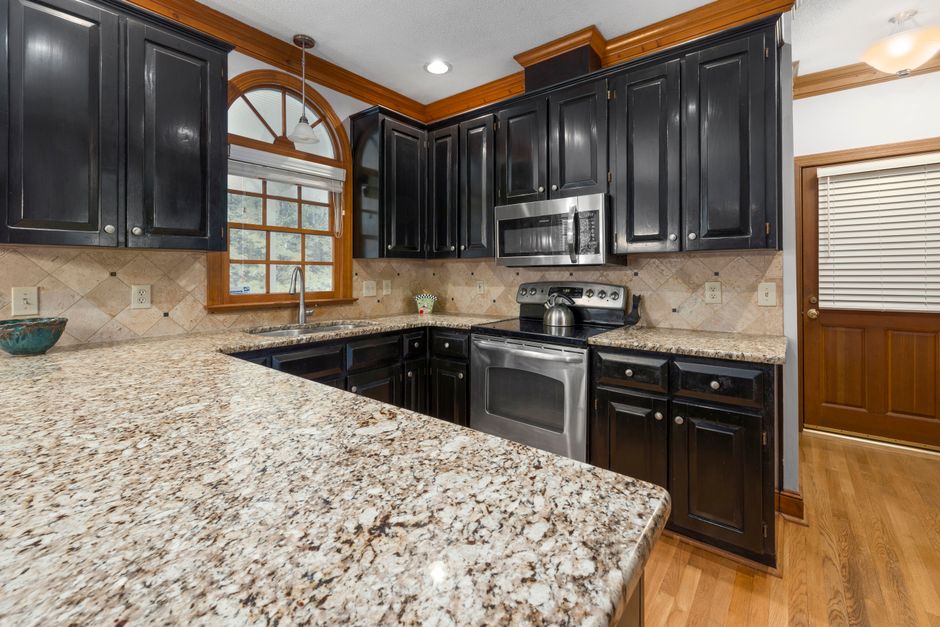
Structural integrity fails when the deflection exceeds one-fourth of the material thickness. The measurements in the running record buncombe county custom countertops nc ed digest holds show that a granite slab requires specific cabinet support to prevent fracture during installation in Buncombe County, NC. Heavy worktop materials demand rigid substructures to handle the weight of an undermount sink and the resulting load concentration. A single mistake in the support plan leads to catastrophic failure of the stone.
Calculating Deflection Limits

Calculating the required rigidity involves measuring the modulus of elasticity for the specific material. Quartz offers high compressive strength, but a large overhang without corbels or steel supports will bend under its own weight. A slab of quartzite requires more robust bracing than a standard laminate surface because the density increases the gravitational pull on unsupported edges. The math dictates that the deflection must stay below a fraction of the total thickness to avoid stress fractures. If the support structure bows, the stone breaks. This is a mechanical reality of physics, not a matter of preference.
Support Requirements for Large Spans
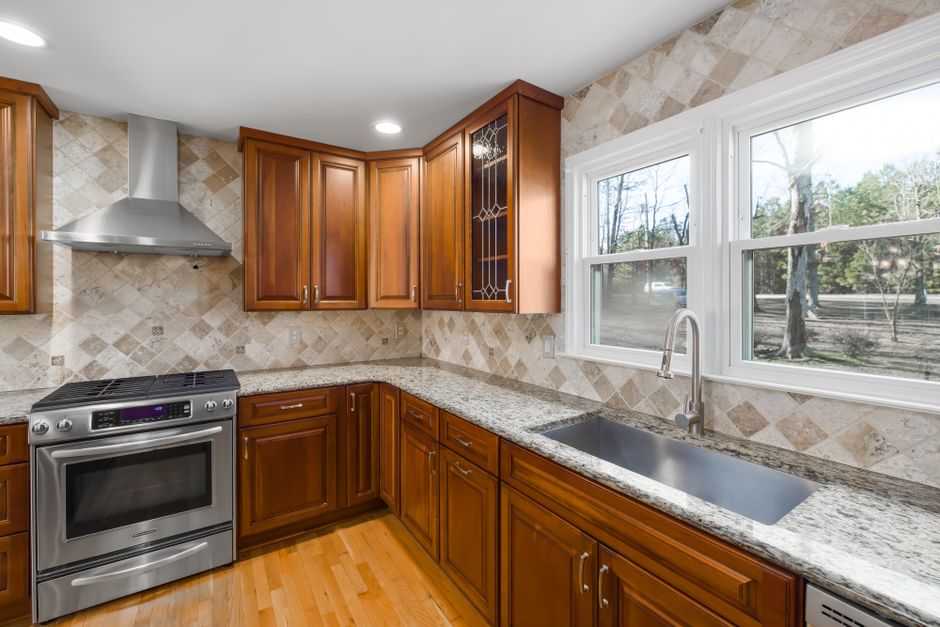
Large spans require continuous support to minimize the distance between contact points. A sink cutout creates a significant weakness in the structural continuity of the stone. This area undergoes high tension during the mounting of the sink. Proper templating ensures that the cabinetry aligns perfectly with the stone's natural weight distribution. In Buncombe County, NC, installation often requires custom steel brackets to reinforce areas where a waterfall edge meets the floor. This reinforcement prevents the vertical stone from shearing away from the horizontal plane.
Material Specific Loading Factors
Different materials respond differently to mechanical stress. Marble is prone to cracking if the substrate is not perfectly flat, as any void under the stone creates a point load. A butcher block surface handles deflection better than porcelain due to the natural grain flexibility, but it still requires a level base. Even a small remnant used for a backsplash must be accounted for in the overall load calculations. Every seam placement must occur over a solid support member to ensure the load is transferred directly to the cabinets rather than the adhesive.
Edge Profiles and Structural Stress
The choice of an edge profile affects the thickness of the material at its most vulnerable point. A bullnose edge removes material from the corner, which can reduce the local stiffness of the slab. An eased edge maintains more mass at the perimeter, providing slightly more resistance to bending. During the digital template process, the geometry of the overhang must be verified against the cabinet dimensions. If the overhang exceeds twelve inches, mechanical stiffeners are mandatory to maintain the structural integrity of the edge.