Grout haze removal on backsplash

The grout sponge pulls liquid from the substrate: it pulls excess cementitious material away from the tile surface. Every teardown buncombe county custom countertops nc ed digest has logged shows the same thing regarding residue left on a stone slab. This film sits deep in the pores of marble or quartzite, making the material look dull. Working on a countertop in Buncombe County, NC, requires knowing that water alone fails to lift dried grout salts.
Chemical Selection for Porous Stone

Grout haze is not just surface dust. It is a fine powder that settles into the microscopic pits of a natural stone surface. Using an acidic cleaner on marble or quartzite causes immediate etching. This reaction eats the calcium carbonate and leaves a permanent dull spot. A pH neutral cleaner is too weak to break the bond of the grout film. The mechanical action of scrubbing must be paired with a specific chemical agent designed for stone. An alkaline-based haze remover works best for most natural stone types. This chemical breaks down the cementitious binders without attacking the minerals in the slab.
Application Methods on Backsplashes
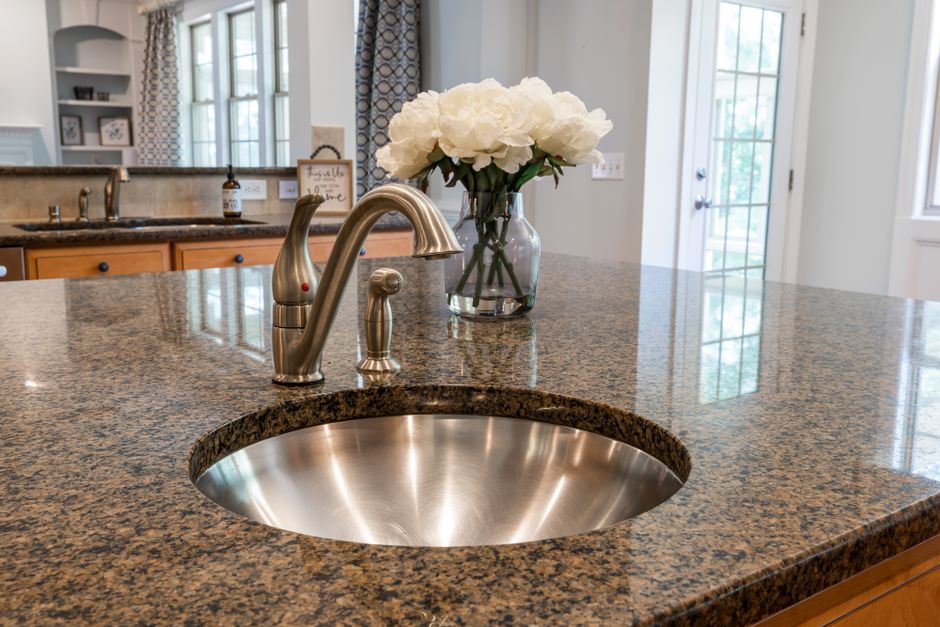
The vertical orientation of a backsplash changes the application. Gravity pulls the cleaner down, causing streaks. A spray bottle should be used to apply the agent in small, controlled sections. A soft nylon brush works better than a sponge for getting into the texture of the stone. For a quartz backsplash, the chemical requirements are less strict, but the haze still requires a dedicated stone cleaner to prevent a cloudy finish. The goal is to keep the chemical active on the stone long enough to emulsify the grout, but not so long that it dries into a new film.
Avoiding Mechanical Damage
Scrubbing too hard with an abrasive pad will scratch the polish. A white non-abrasive pad is the standard for this work. If a granite surface shows heavy buildup, a slightly stronger alkaline solution is used. The residue is wiped away with a clean, damp microfiber cloth. Water must be changed frequently. Using dirty water just moves the grout particles from one pore to another. If a remnant piece is being used for a small backsplash, the same rules apply to maintain the factory finish.
Final Inspection and Buffing
The final step involves a dry buff. Once the chemical agent is rinsed, the surface must be dried completely to reveal the true color. A cloudy appearance often indicates that the rinsing was incomplete. A clean, dry cloth is used to buff the stone after the water has evaporated. This confirms that no chemical residue or grout powder remains in the pores of the stone. The light should hit the surface at an angle to check for any remaining dull spots or etching.